
Alcohol is often treated as a shortcut to relaxation. Whether it’s a post-work drink, something to sip at a party, or a nightcap before sleep, it tends to show up in moments meant for unwinding. Still, a growing number of Americans are questioning that role as health concerns become harder to ignore.
That change leads to a simple but important question: how do you relax without it?
Research points out that much of alcohol’s stress-relieving image comes from habit and expectation. The brain learns to connect it with feeling at ease or socially comfortable. Over time, stress triggers that learned response.
According to mental health professionals, those associations aren’t fixed. Replacing them with healthier habits can regulate the nervous system more effectively, without creating reliance.
Why Alcohol Often Feels Like Stress Relief
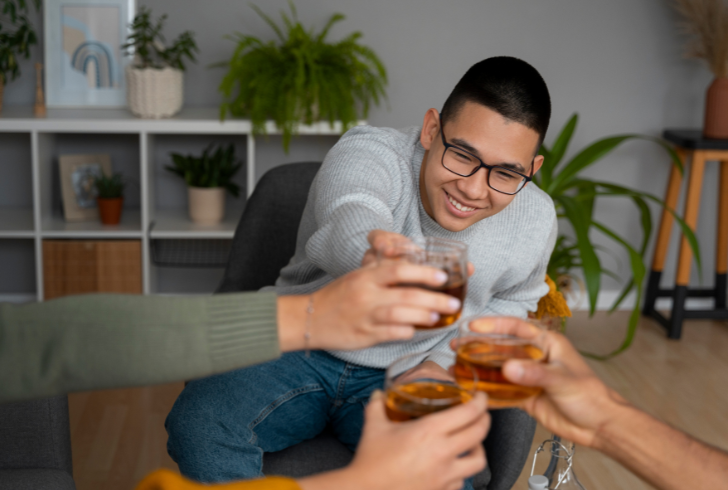
Alcohol promises fast emotional relief. According to Dr. Suzanne Wallach, a licensed therapist and clinical director of SoCal DBT, the brain gradually forms a strong association between drinking and relaxation.
“People turn to alcohol because it promises quick relief,” Dr. Wallach explains. “Over time, the brain anticipates that sense of relief from alcohol and creates a learned association of ‘When I drink alcohol after a long day, I feel calmer,’ even if alcohol itself doesn’t actually soothe or help.”
Social influence strengthens that belief. Alcohol is frequently framed as a reward after a demanding day. Concepts like happy hours or “mommy wine time” reinforce the idea that alcohol equals relaxation.
Yet the body reacts differently in the long term.
Aliya Pasik, director of addiction medicine at the Rochester Center for Behavioral Medicine and author of The Sobriety Manual, explains that alcohol disrupts the nervous system. Stress and anxiety often increase as the body starts relying on alcohol to regulate emotions. Gradually, natural coping ability weakens, irritability rises, and tolerance builds. Over time, more alcohol may be required to achieve the same feeling.
Dr. Wallach notes that the craving often has less to do with alcohol itself. Instead, people search for a smooth transition between work and home, a sense of comfort, or relief from daily pressure.
Several science-backed strategies can provide those benefits directly.
Grounding Techniques That Calm the Nervous System
Stress often triggers the body’s fight-or-flight response. Grounding techniques help the body return to a calmer state by slowing breathing and reducing tension.
Dr. Wallach recommends simple breathing exercises such as box breathing or extending the exhale. A common method involves inhaling for four seconds and exhaling for six seconds. This pattern signals the nervous system to relax.
Other effective techniques include:
1. The butterfly hug, which involves crossing the arms over the chest and gently tapping the shoulders
2. Progressive muscle relaxation, where muscle groups tighten and release in sequence
3. Slow breathing combined with body awareness
Gentle physical movement also helps discharge built-up tension. Activities like stretching, yoga, walking outdoors, or gardening provide a steady rhythm that encourages relaxation while keeping the body active.
These small actions can shift the nervous system away from stress without relying on alcohol.
Preparing for Social Situations Without Drinking
Many people assume alcohol improves social confidence. Research suggests the effect may partly come from expectation rather than chemistry.
Dr. Eric Wood, director of counseling and mental health at Texas Christian University, explains that placebo effects often influence social behavior.
“There’s research confirming the role of placebos for people who assume that they need alcohol to function better socially,” Dr. Wood says. “In my experience with young adults, the main difference for those who feel awkward in social situations is that they tend not to be as critical or hypervigilant while drinking, but these can be done without alcohol.”
Planning ahead can reduce pressure during social events.
Decisions made before leaving home can make the situation easier to manage. These include choosing what non-alcoholic drink to order, deciding how long to stay, and preparing a simple exit line in case the event becomes overwhelming.
Once at the gathering, short responses help avoid uncomfortable discussions. Pasik suggests a simple script such as:
“I’m keeping it simple tonight, ginger beer for me.”
Asking “How was your week?” is often enough to shift the tone of a conversation.
Turning your attention outward can also reduce self-critical thoughts. Noticing the music, the setting, or what others are saying helps keep your mind present. Open-ended questions invite richer conversations and make it easier to focus on listening.
Holding a drink, such as sparkling water or ginger beer, can help avoid repeated offers. If anxiety rises, grounding techniques—like pressing your feet into the floor, holding something cold, or taking slow breaths—can help you stay steady.
Building a Relaxing Bedtime Routine

Evenings often trigger the urge to drink because alcohol signals the end of the day. A consistent routine can create that same sense of closure.
Pasik recommends repeating a calming sequence each night so the body recognizes it’s time to rest.
Helpful routines may include:
- Taking a warm shower
- Wearing comfortable sleepwear
- Performing gentle stretches
- Drinking chamomile tea
- Reading a relaxing book
- Two-voice journaling is another technique Pasik suggests. It separates anxious thoughts from more balanced responses.
- One line reflects the worry, while the next offers a steady perspective. Writing both can make concerns feel easier to manage.
- Other quiet activities—like reading familiar fiction, puzzles, meditation, or coloring—can help interrupt cycles of overthinking.
- Dr. Wallach notes that familiar books work well because they require less mental effort.
The Role of Social Connection in Stress Relief
Staying connected helps manage stress.
Even small interactions can improve mood.
Group activities provide additional support.
Strong relationships build resilience and reduce stress.
Alcohol may seem helpful, but it often increases anxiety over time.
Healthier habits provide better long-term results.